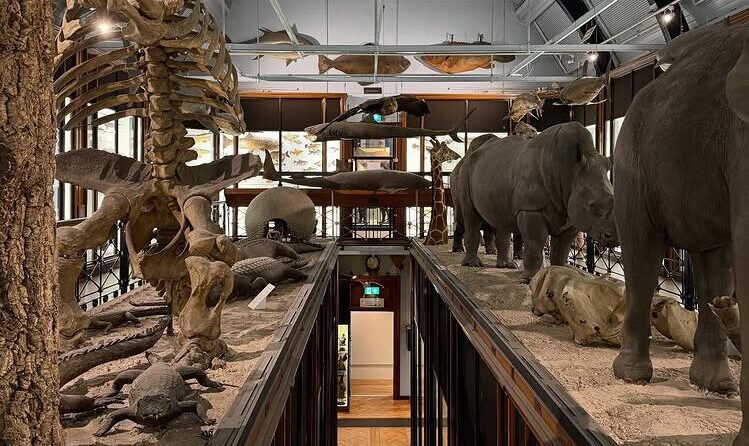
The Natural History Museum at Tring, Hertfordshire, photo credit: Dr Errol Francis
The September/October 2025 Issue of the Museums Journal published the following contribution from Dr Errol Francis, Artistic Director and CEO of Culture&.
Ethical issues can be explored with diverse audiences
Antitheses project is looking at the morals of displaying human remains, says Dr Errol Francis.
There is growing debate around the ethics of displaying human remains. For example, a London museum holding the remains of a stillborn Congolese baby, removed reference to the foetus in its catalogue of items that can be viewed for medical research after public criticism. In March, the All-Party Parliamentary Group for African Reparations published Laying Ancestors to Rest, a report calling on government to tighten regulations applying to human remains older than the 100 years under the Human Tissue Act.
Against this background, the Museums Association (MA) has reviewed its Code of Ethics, and questions around storage and display of human remains is a key aspect.
The Wellcome-funded research project Antitheses is exploring the ethics of displaying human remains as part of the Reimagining Museums theme. This project uses creative and collaborative methods to explore the polarising debates around holding and display of contested objects in museums to inform a vision of an ethical museum of the future. To generate thinking on this issue, two interactive sessions considered issues associated with collecting, storing and displaying human (ancestral) remains in museums.
The first was at the University of Leicester’s New Museum School Advanced Programme summer school symposium last May. Attendees were invited to participate in a “trial” considering the question: is it ever ethical for museums to display human remains? The attendees heard from experts from the heritage and museum sectors, and had the opportunity to “cross examine” them. When the same ethical questions were posed after the discussion, opinions had shifted. Although most still agreed that it was ethical to display human remains under certain conditions, the percentage had dropped. Emotional responses were stronger the nearer the remains were to the present time.
The other session was at last year’s MA conference in Leeds, where an interactive workshop and panel discussion focused on plans to revise the code of ethics. Attendees were first asked to share three words that describe what an ethical museum would look like – honest, transparent and listening were common responses. When asked Errol Francis is the artistic whether museums should be director and spaces for addressing social chief executive justice, most agreed that they of Culture& should be. Then they were asked if the historical concept of Mouseion (from the ancient Library of Alexandria) was relevant today (ie a museum space for the exchange of knowledge and debate) – and most agreed that it was. Then a panel presented their positions on current ethical dilemmas. Key issues identified included having a clear position and timeline for action, particularly an investigation into the provenance of museum collections.
The events demonstrate that ethical issues involving sensitive topics such as human remains can be explored successfully with diverse audiences. The Antitheses research team will use similar methods to gather data with different interest groups, including museum professionals and the public.