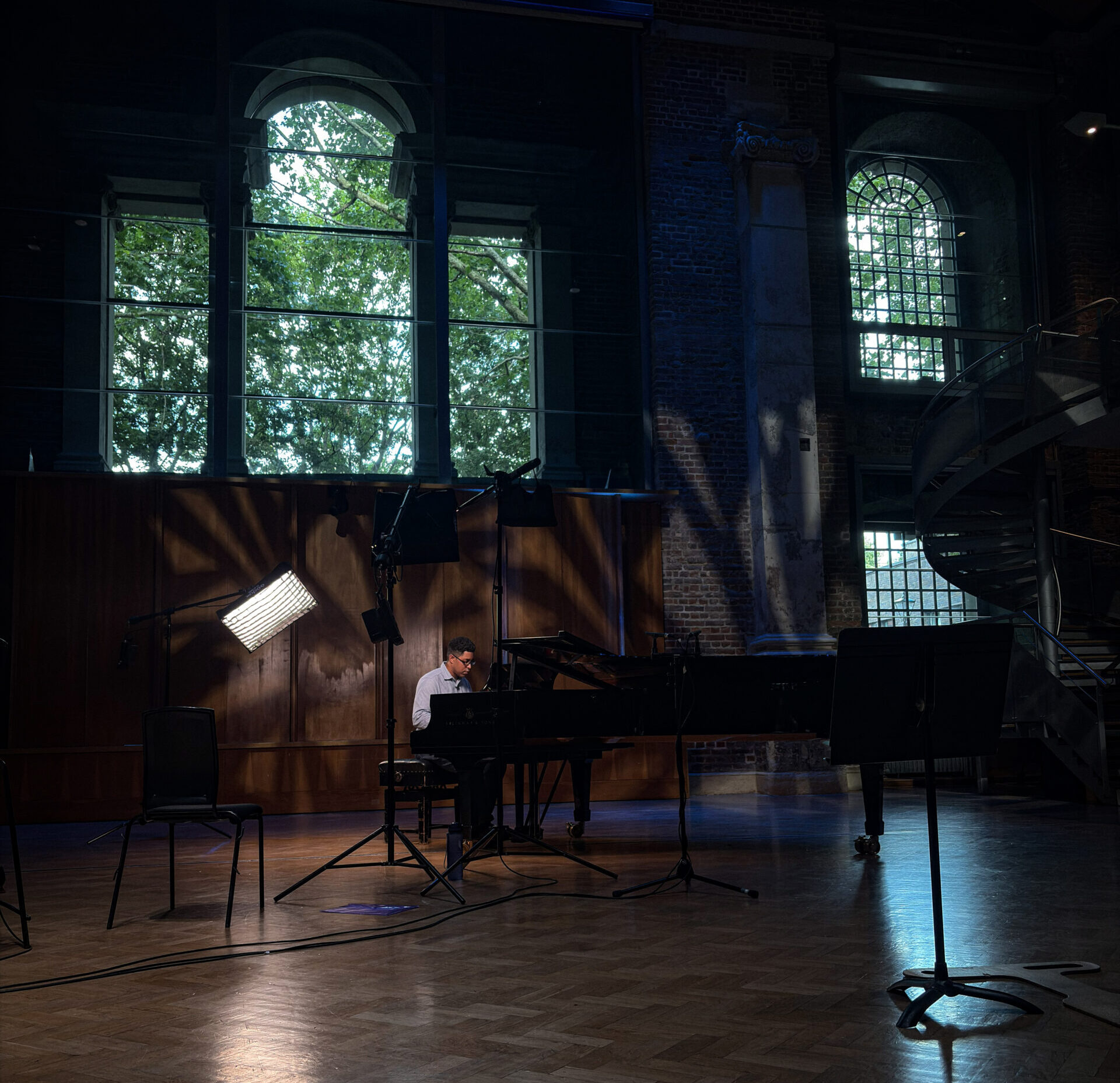
David Önaç: Atlantic Requiem
11 October 2026 at 4pm and 5.45pm
LSO St Luke’s
Performers
London Symphony Orchestra and the BBC Singers
Malcolm J. Merriweather (conductor)
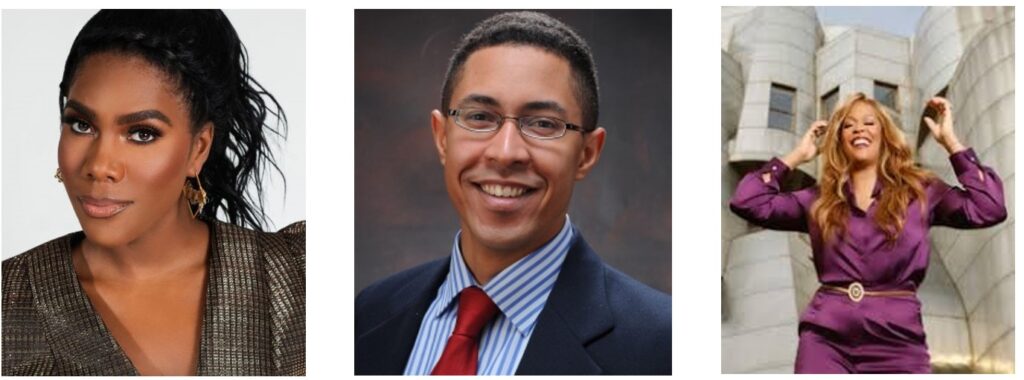
Brittany Renee (soprano)
J’Nai Bridges (mezzo soprano)
Orson Van Gay II (tenor)
Atlantic Requiem
Atlantic Requiem is a 40-minute, five-movement work scored for large symphony orchestra and chorus with 3 soloists selected from the US conducted by Malcolm J. Merriweather. Atlantic Requiem will be recorded and released internationally on the LSO Live label, available on CD and streaming.
Lloyd’s commissioned Professor Alexandre White of Black Beyond Data from Johns Hopkins University, Baltimore to digitise its archive and explore its historic role insuring both the ships and the enslaved being trafficked during the transatlantic trade in 18th and 19th-Centuries, before the abolition of slavery. Funded independently by the Mellon Foundation, the findings were published online in a digital humanities archive, Underwriting Souls. Following the launch of the Underwriting Souls research, Lloyd’s published its response, “Inclusive Futures”, setting out a multifaceted programme to support Black & ethnically diverse groups from the classroom to the boardroom.
Culture& approached Lloyd’s to commission a work that would memorialise the lost lives of enslaved Africans and acknowledge the extraordinarily significant contribution of their descendants to transatlantic culture both then and now. The libretto blends the Catholic Requiem Mass with word-setting of a 1791 Grand Jury testimony (from the Newport Historical Society, Connecticut) and legal documents from the Lloyd’s archive, testament to the objectification, commodification and dehumanisation of the enslaved. The Atlantic Requiem will incorporate the sound of the Lutine Bell, as a symbol of both loss and survival, held to this day at the Lloyd’s HQ offices (RLPO will provide a bell with the same pitch for the performances). Historically one toll of the Lutine Bell signified a loss of a boat at sea and two for a safe return.
Manchester-based composer David Önaç who spent his early childhood in the Bahamas and subsequently studied composition at Cambridge under Robin Holloway, uses a sound world that blends contemporary classical orchestral and choral conventions with the rich harmonies, irresistible grooves and memorable melodic fragments from jazz, gospel and rap. Both sound worlds interact, react and fuse in a way carefully constructed to display the horrors while yearning for a future where cultural disunity is superseded by exciting coexistence, simultaneous cohesion and joyful and fearless fusion.
As Önaç explains:
“I have been fortunate to have inherited an exceedingly diverse range of races from both sides of the Atlantic through my parents (well beyond the visibly obvious white and black). My hope is that the Atlantic Requiem’s combination of text and music will provide a vehicle for others to express sorrow at this loss of life, this blindness to true value, this waste of potential – and to yearn for a future where all human beings appreciate the high dignity of others. The soloists at the end of the Atlantic Requiem sing the same material which in earlier movements expressed the woes of the current world but by the end are sung, gloriously transformed, as an allegory for the continuity of identity in a renewed world with the only discontinuity being the absence of strife.”
The form of the Requiem Mass was chosen as a repose for lost souls and to reflect the uncomfortable position of Christianity in the history of enslavement – in religious conversions of indigenous people, the invocation of biblical texts to justify enslavement and then in the overthrow of enslavement, as in the example of the enslaved Baptist deacon Rev Samuel Sharpe who led the 1831 Christmas Rebellion in Jamaica.
As Dr. Errol Francis, CEO and Artistic Director of Culture&, explains,
“There were two main reasons for why we asked the composer to incorporate the Catholic liturgy of the Requiem Mass . First, we wanted to acknowledge the uncomfortable position of Christianity in the history of enslavement – in religious conversions of indigenous people by colonists, the invocation of biblical texts to justify enslavement and then the role of faith in the overthrow of enslavement, as in the example of the enslaved Baptist deacon Rev Samuel Sharpe who led the 1831 Christmas Rebellion in Jamaica. The second reason for choosing the Requiem Mass was in response to the performative religious language contained in the historic Lloyd’s underwriting documents. For over 200 years (1779-1982) the standard marine insurance underwriting contract covering both vessels and cargo began with the phrase: ‘In the name of God, Amen.’ The document then continued with the words: ‘Whereof is Master, under God for this present voyage. These words are incorporated into the libretto by the composer.
The research by Johns Hopkins University revealed how integral the maritime insurance business was to the City of London and UK economies. The huge profits generated by slavery supported the growth of British industry and commodity markets for goods such as sugar, rum and cotton. This history shaped the lives of Britons of all identities and all those who live on either side of the Atlantic Ocean and remains central to our understanding of the modern world. It was thought a large-scale musical response to the research would acknowledge the ineffable horror of this trade of human beings. As Victor Hugo said, “Music expresses that which cannot be said and on which it is impossible to be silent.”
Further information:
Our historical links to the transatlantic slave trade – Lloyd’s
About composer David Önaç
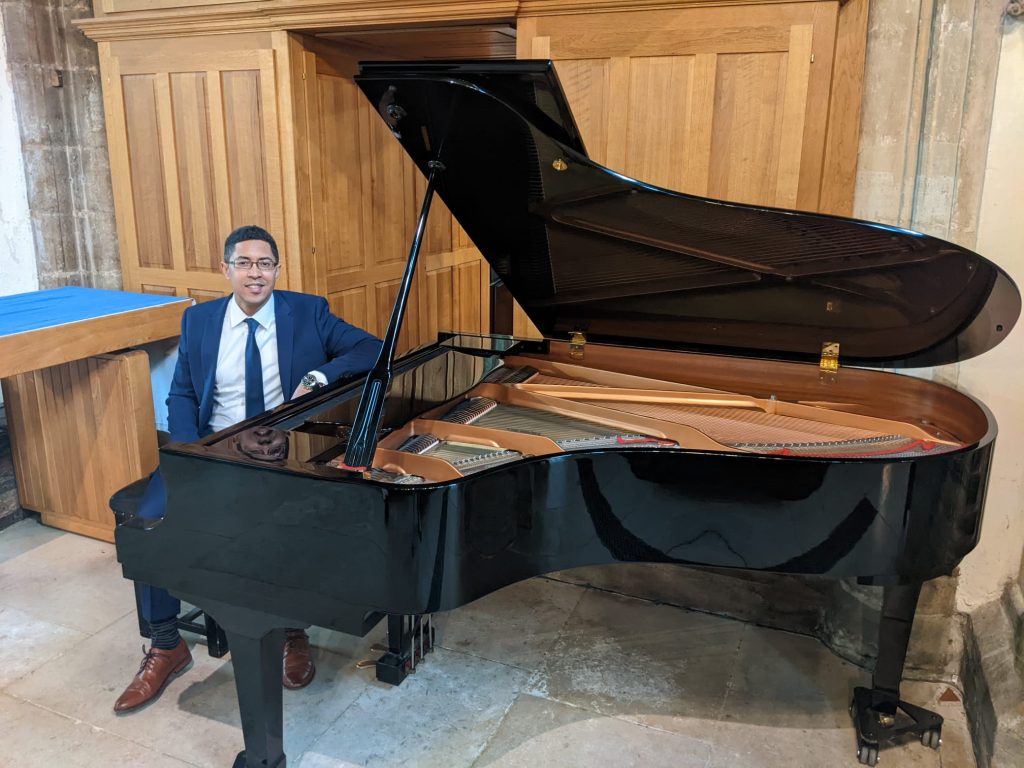
Dr David Önaç studied Music at the University of Cambridge, followed by two master’s degrees in composition at Cambridge (with Robin Holloway) and the RNCM (with Adam Gorb), completing his PhD in Composition at the University of Manchester (with Camden Reeves) in 2013. He has lectured at the University of Birmingham, RNCM and University of Manchester.
As an accomplished pianist from a young age, David was immersed in jazz and gospel alongside classical repertoire during his childhood years in the Caribbean, and after moving to the UK was the soloist in various well-known piano concertos during his teenage years – meanwhile exploring jazz harmony and improvisation at every opportunity.
After being awarded the runner-up prize for BBC Young Composer of the Year (2000), his activities as a composer pianist have continued to centre on, or fuse, contemporary classical, jazz and gospel and he has frequently performed his own pieces for and featuring solo piano. This includes premiering his piano concerto Newton’s Cradle, for which he won the 2012 Royal Philharmonic Society Composition Prize. His Five Etudes for solo piano, a virtuosic fusion of his favourite styles, were premiered by Simon Smith in Cambridge and Peter Donohoe in Brussels, were selected as the set work for the 2023 Scottish International Piano Competition, and have had numerous international performances including at the 2025 Van Cliburn International Piano Competition.
David’s songs, arrangements and performances as a gospel choir MD have been broadcast on BBC radio and television, including Songs of Praise Gospel Choir of the Year (2016) and he places significant value on the development of young musicians, with many of his activities centring on this priority. He has been commissioned numerous times by the ABRSM, including to write the jazz-influenced A Distant Star in the Stillness for the 2023-24 Grade 5 piano syllabus. His ‘Spirituals arranged for Piano’ has recently been released by EVC Music and reviewed as “a gem of a collection that is sure to be treasured by pianists throughout the early years of their playing.” He was musical director of the University of Manchester Harmony Gospel Choir for c.15 years, winning the University Gospel Choir of the Year competition multiple times during his tenure. David has also been a tutor in composition and jazz at the Junior RNCM since 2018, with his students going on to study at Cambridge, Birmingham, Guildhall, Royal Northern College of Music, Royal Conservatoire of Scotland and Royal Academy of Music.
A fuller selection of recordings of David Önaç’s works are at: www.composerdavidonac.com
Culture&
Culture& is an arts and heritage charity founded in London in 1988, now based at the University of Staffordshire, and supported by Arts Council England and various trusts and foundations to promote inclusivity and relevance in collaboration with UK arts and heritage organisations. Culture& delivers on its mission through education training, research and public programming. Culture& has previously commissioned new music from the BAFTA award winning composer Jocelyn Pook and pianist, composer, and musical director, Peter Edwards. The charity’s flagship education programmes include the New Museum School at the University of Leicester and the Cultural Leaders Programme at Sotheby’s Institute of Art. Current displays include The Keeper of all the Secrets ceramic art by Jacqueline Bishop at the Queen’s House, Royal Museums Greenwich and In Perpetuum, a sonic installation by Güler Ates at the Museum of the Home. Recent research reports include It’s all about handing over power on curatorial diversity for the Art Fund and Culture& was recently awarded a major grant by the Wellcome Trust to conduct research on ethical challenges facing museums, in collaboration with the University of Oxford.
About Lloyd’s
Founded in 1688, Lloyd’s is the only insurance marketplace of its kind in the world. It brings together more than a hundred syndicates and thousands of investors, enabling the market to shoulder more insurance risk for every unit of capital than any other financial institution in the world. The role of the Corporation is to advance and protect that market – by maintaining underwriting discipline and its financial strength; and by attracting expertise, innovation and scale.
In response to the Black Lives Matter movement of 2020, Lloyd’s made a formal apology for the significant historical role it played as underwriters in the transatlantic slave trade in enslaved Africans. The company acknowledged it had played a significant role in enabling the trade by providing insurance for the ships that facilitated the human trafficking and their owners. This apology was followed by further commitments in 2023 to address this distressing historical legacy through research, education and investment in black and ethnic minority communities including a £40million fund for inclusion programmes.
Image credit © Dario Acosta.