More on Reimagining Museums
Reimagining contested objects: To whom does Nefertiti belong?
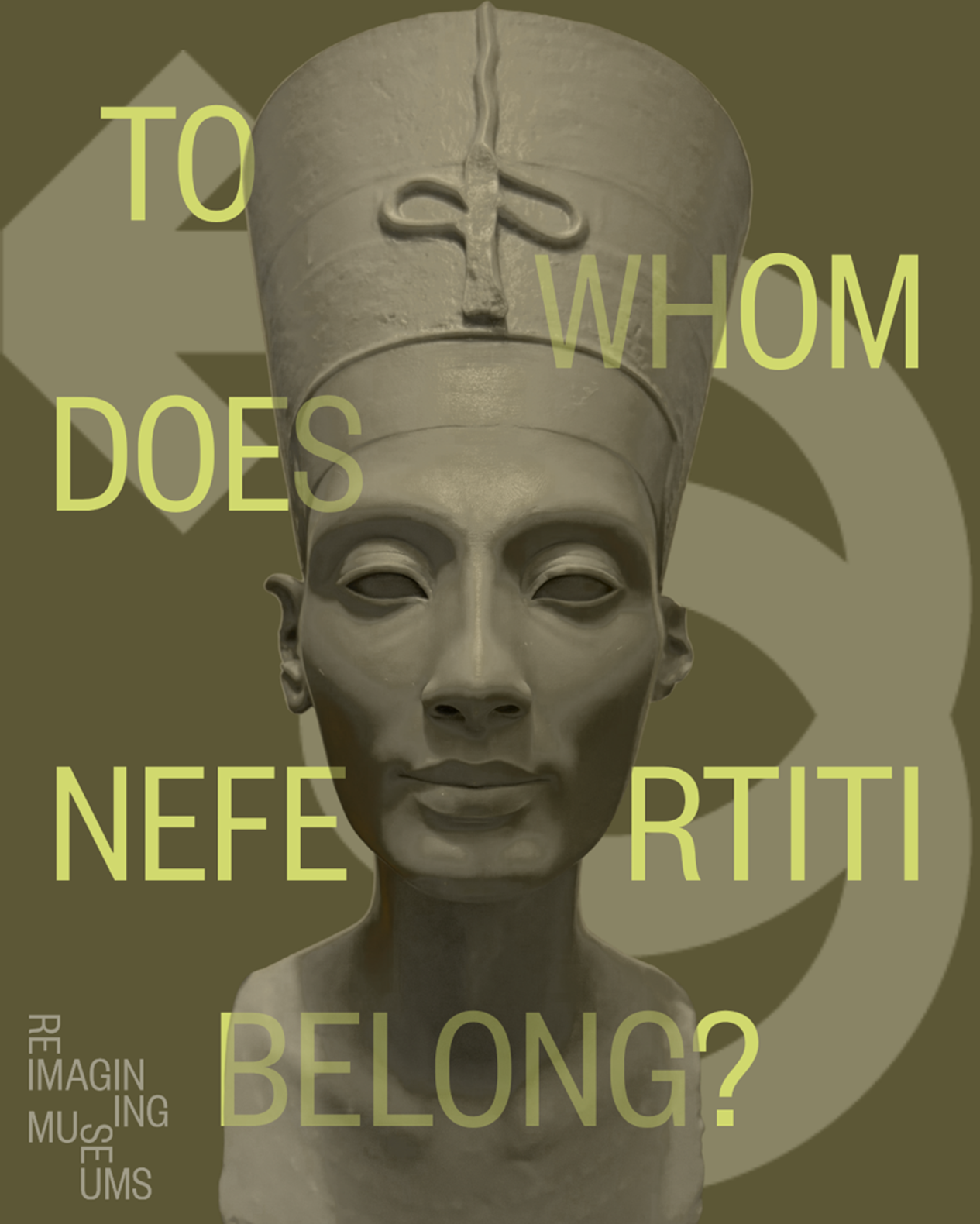
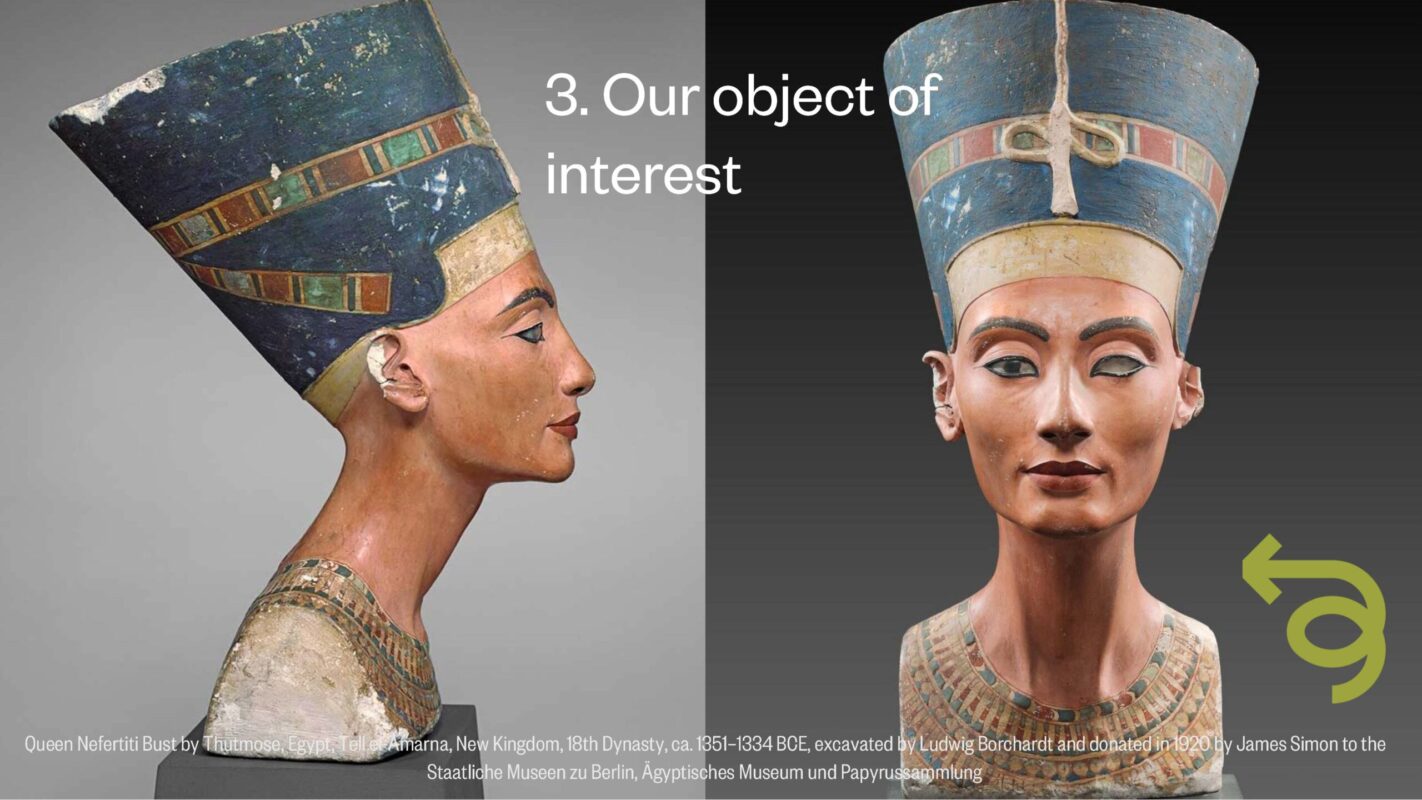
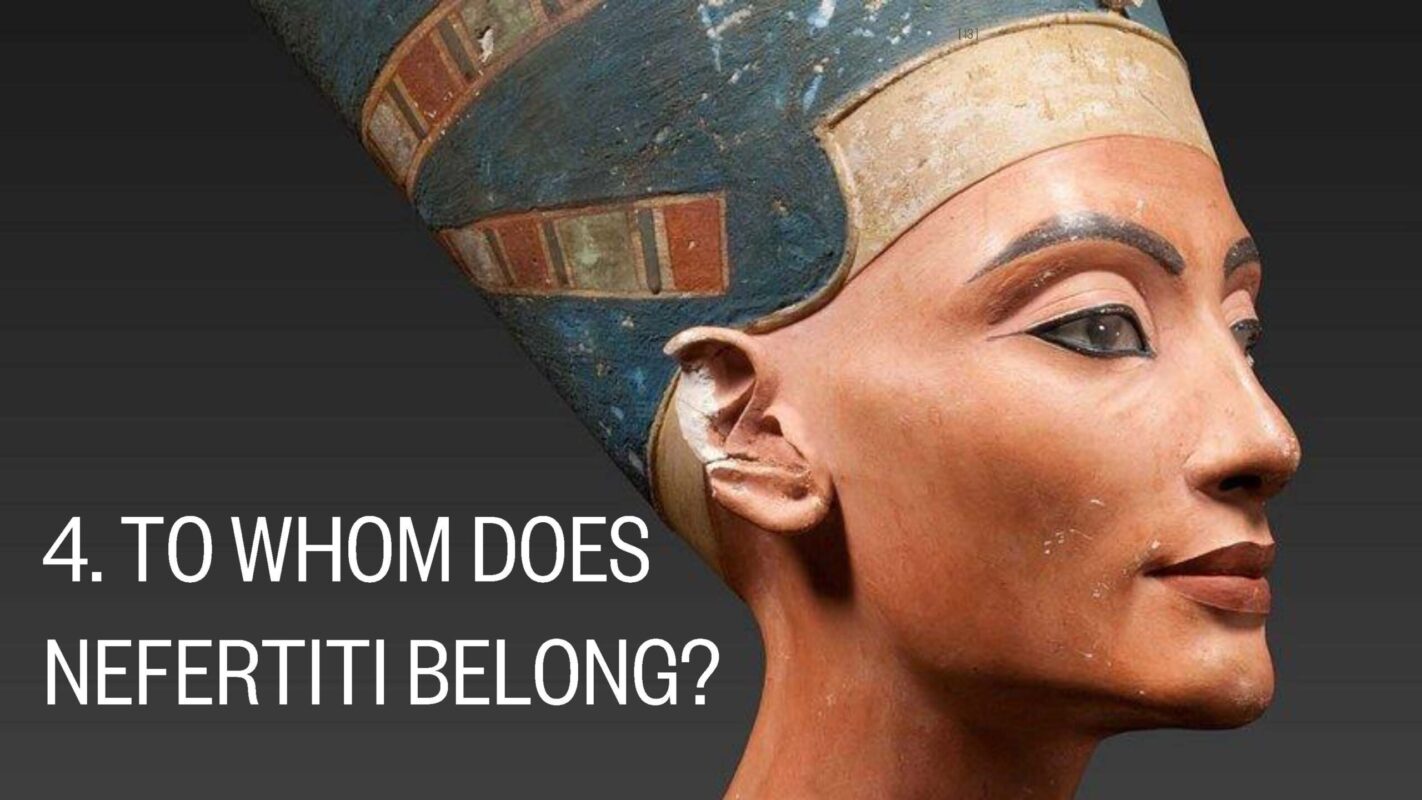
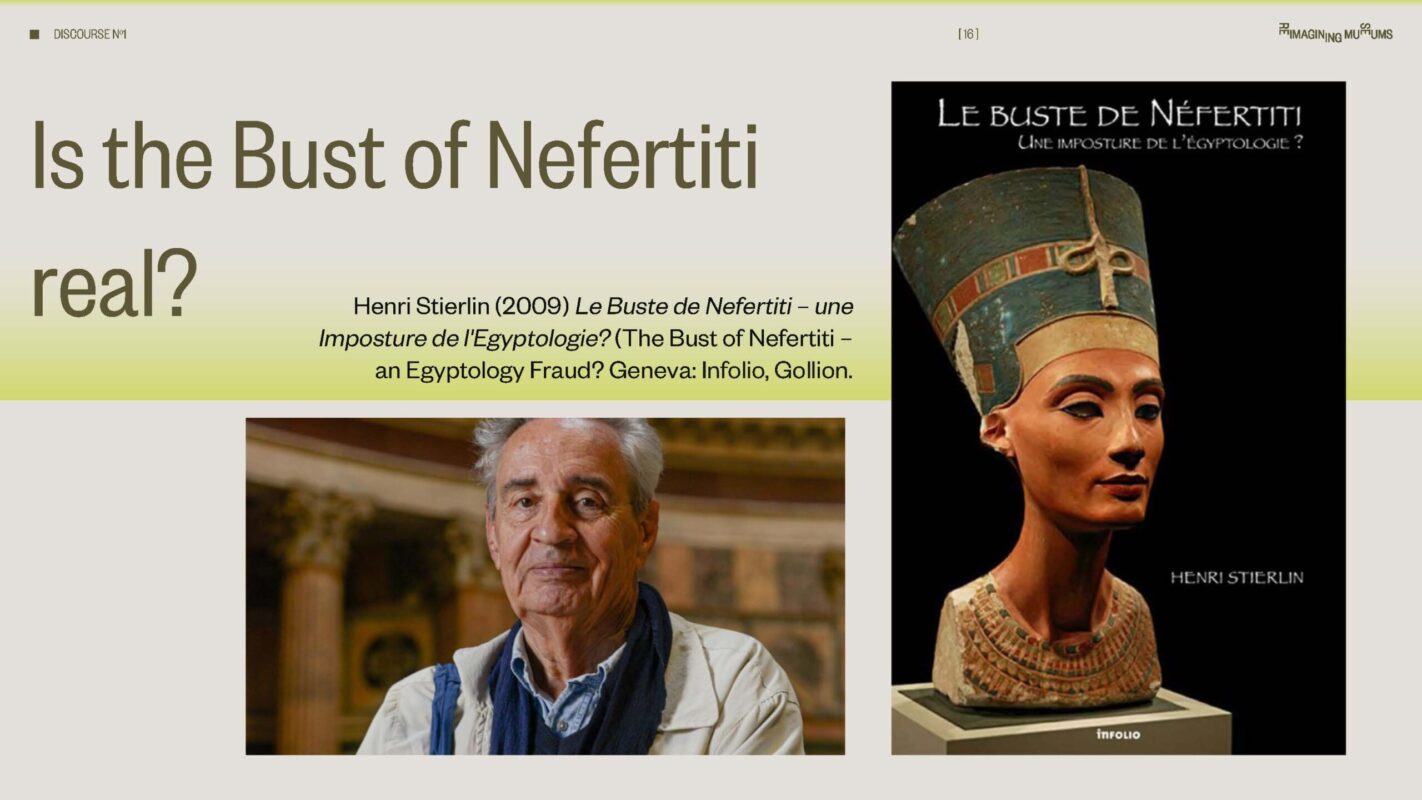
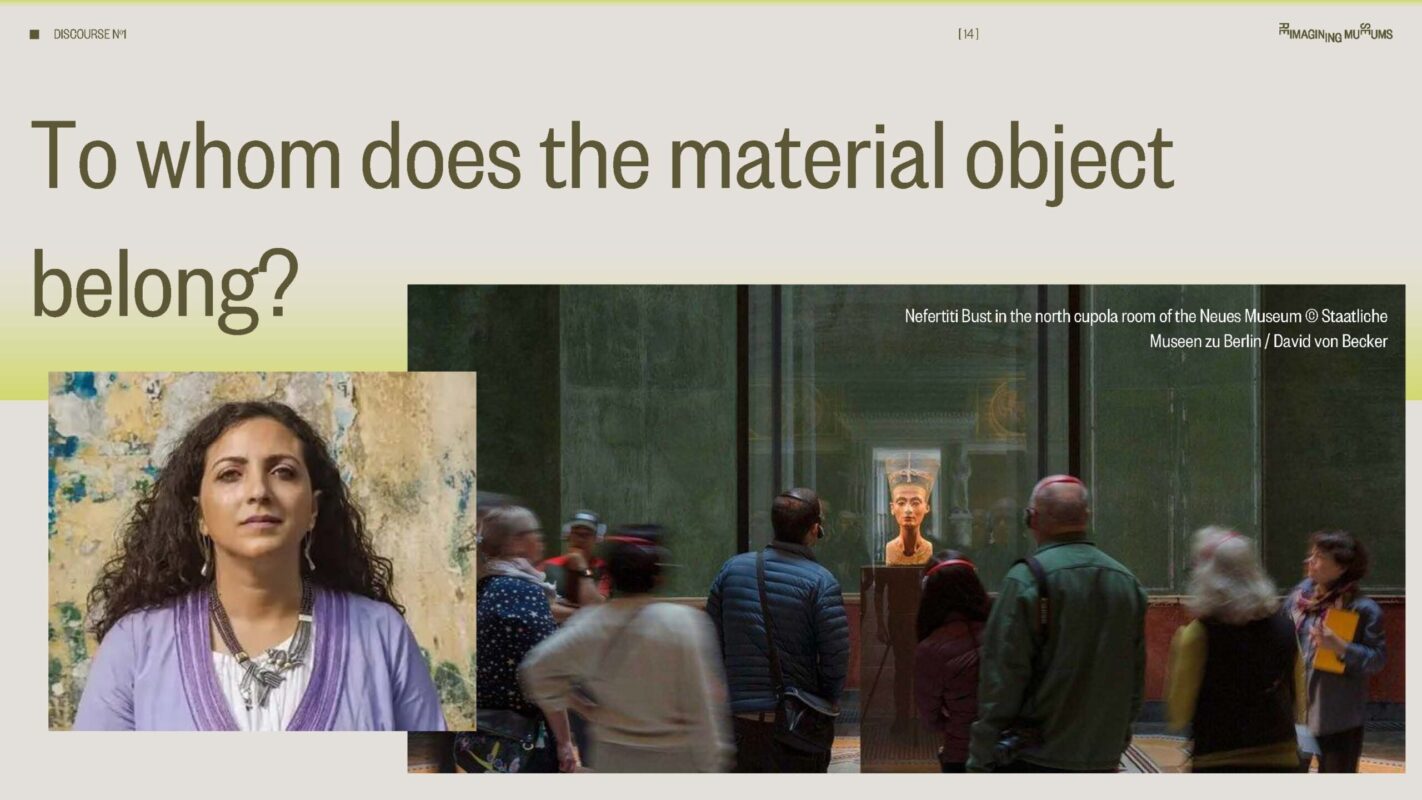
The bust of the 14th Century BCE 18th Dynasty Ancient Egyptian Queen Nefertiti, held by the Neues Museum in Berlin, is one of the world’s most iconic and contested objects: raising pertinent questions regarding her provenance, authenticity, and use within the cultural zeitgeist. These core concerns how it came into the possession of Berlin’s Neues Museum, whether it should remain there, questions about Nefertiti’s ethnic identity, and debates over the object’s discovery and authenticity – have sparked debate and division within museology, cultural studies, and across geopolitical relations for more than a century. Reimagining Museums (RiM) proposes the ‘turn of the replica’, as an ethical alternative to the “wicked problem” (Davis 2022) of restitution.
With delegates at the ANTITHESES Wellcome Discovery Research Platform Conference at the University of Oxford in March 2026, the Reimagining Museums team piloted a creative and participatory workshop. Our session, “To whom does Nefertiti belong?”, offered an opportunity to discuss and reflect on key ethical problems in contemporary museology (restitution and repatriation, cultural iconography, and authenticity) through the example of Nefertiti.
1. The contested queen
Nefertiti is a fascinating object to work with as it is a compelling example, and case study, of contestation and division across multiple domains, including ethical practice, contemporary geopolitics, and decolonisation.
Significantly, the Bust has been interpreted as a symbol of the transformation of Egyptian heritage into the Western canon of art (Hanna 2023). Egyptian Egyptologist, Monica Hanna, studied the intricacies of the entanglement between cultural property with heritage politics, writing that:
“Nefertiti’s bust has become the symbol of the transformation of Egyptian heritage where the “Empire” as a symbol of Western imperialism has turned a historical ruler into a controlled ambassador in an imperial capital. Questioning the ethical repercussions of colonially acquired heritage is far from these museum discourses. Colonialism has been entrenched in materiality, where imperial centers have been linked to museum objects that were sensorially delimited and defined” (2023, p.258)
Her decolonial scholarship calls for Nefertiti’s restitution as part of a longer process of reparative justice for the colonial violence exercised by the West and the universalist museum. In doing so, Hanna provides a forensic analysis of the circumstances surrounding Nefertiti’s discovery by Egyptologist and architectural historian, Ludwig Borchardt (1863-1938), finding that Borchardt intentionally concealed the object from Egyptian authorities at the time of its discovery. This allowed for the bust to be allocated to the German share during the subsequent partage. Monica Hanna’s work is instrumental to our project, articulating the ethical implications for contemporary museum practice and Egyptology as an area of study.
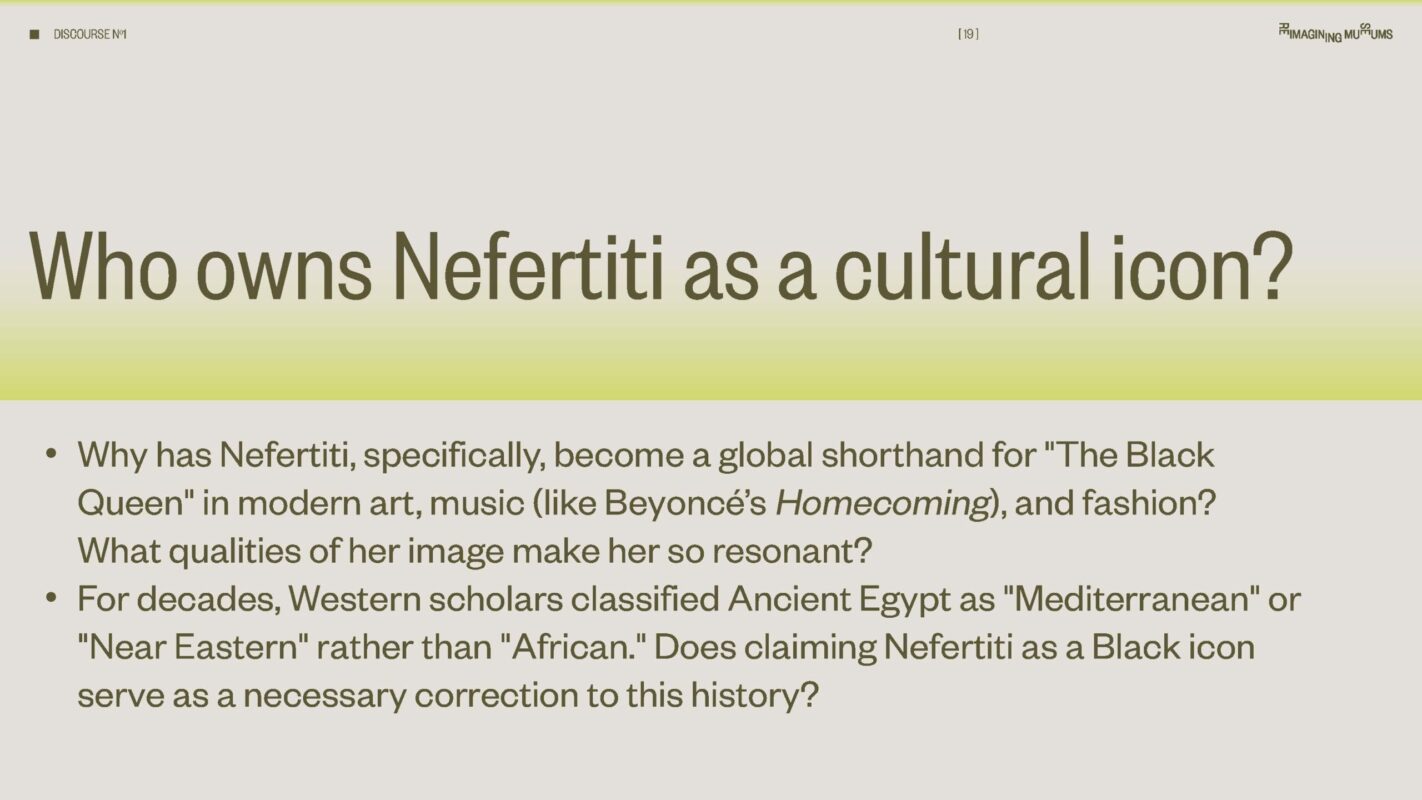
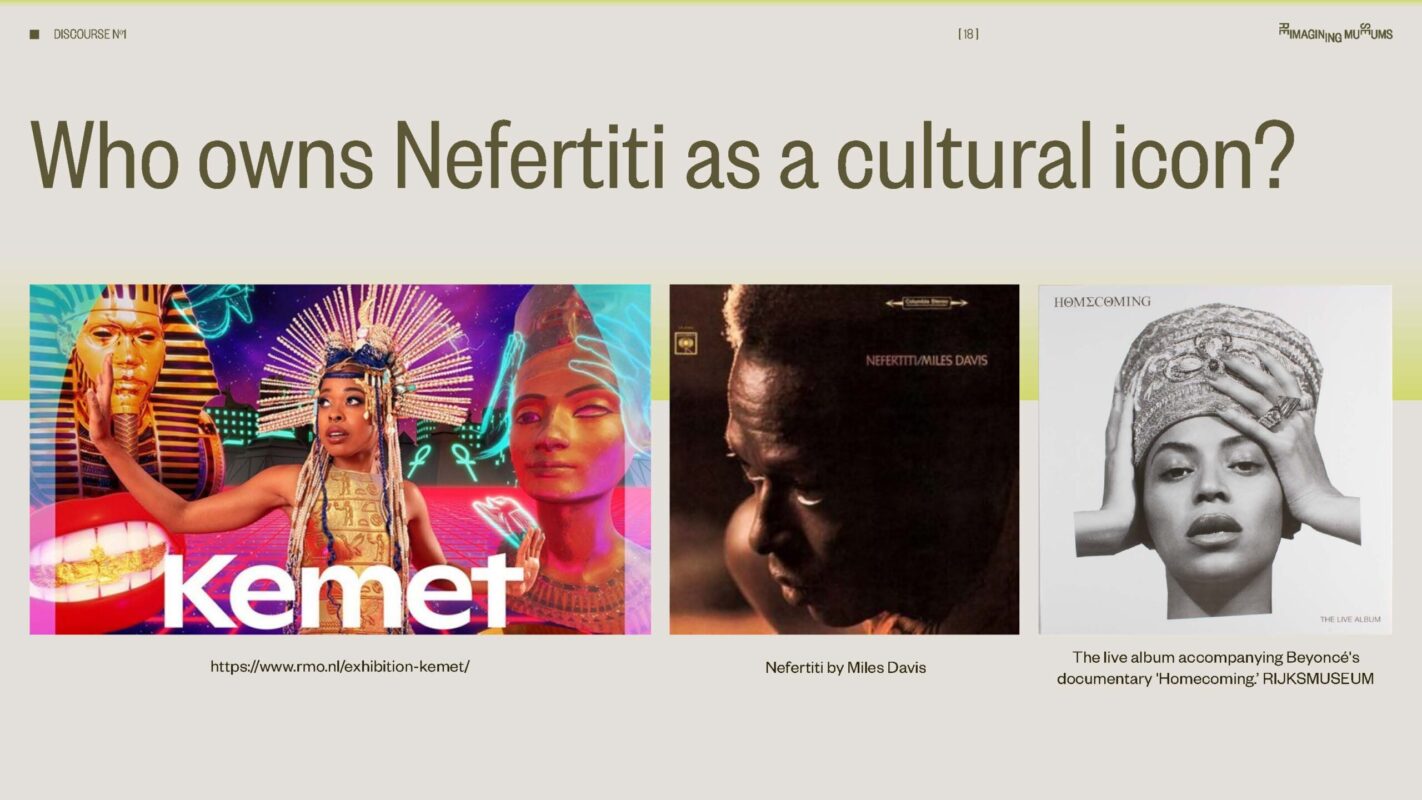
The Bust also holds a particular place within the collective cultural imagination, described as simultaneously “an icon of feminine allure” and “an impression of sensuous androgyny” (McGuiness 2015, 2). Of particular contention, is the reclaiming of Ancient Egypt as part of Black African and African American culture which, since the 1960s, has challenged the Orientalist positioning of Egyptology separate to African culture. A 2023 exhibition ‘Kemet: Egypt in hip-hop, jazz, soul & funk’ at the Rijksmuseum van Oudheden in Leiden explored the importance of Ancient Egypt to Black music, signalling the importance of the popular cultural and intellectual movements from which their creativity emerged. Yet, the exhibition received a backlash from the Egyptian Antiquities Service, which claimed the museum was ‘falsifying history’ with its ‘Afrocentric’ approach that appropriated Egyptian culture and the museum’s excavation licence at the Saqqara necropolis was cancelled.
Dr Errol Francis (Artistic Director and CEO of Culture&) has previously written and lectured on this subject for the University of Oxford’s April Fakes Day 2024 and the Kenneth Kirkwood Day 2025.
2. The turn of the replica
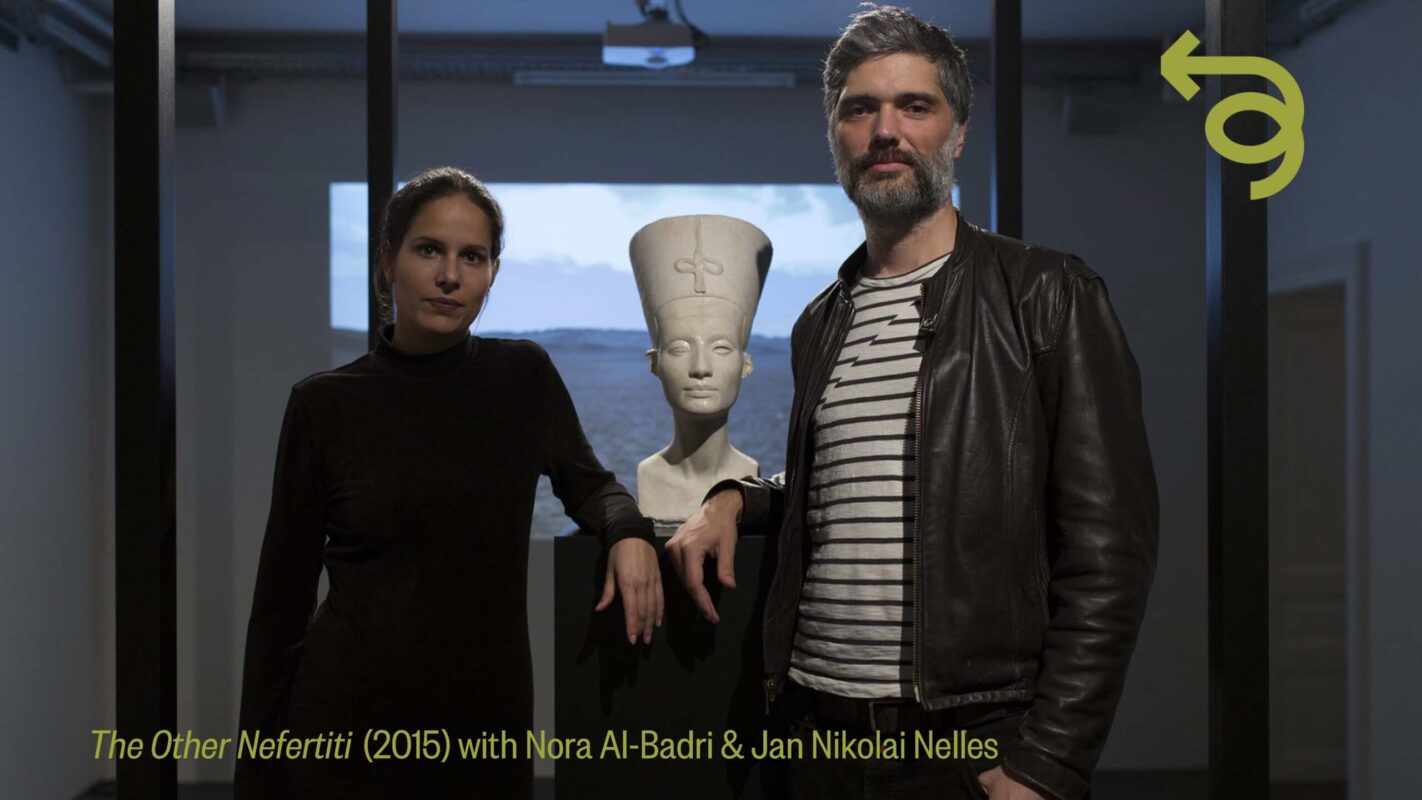
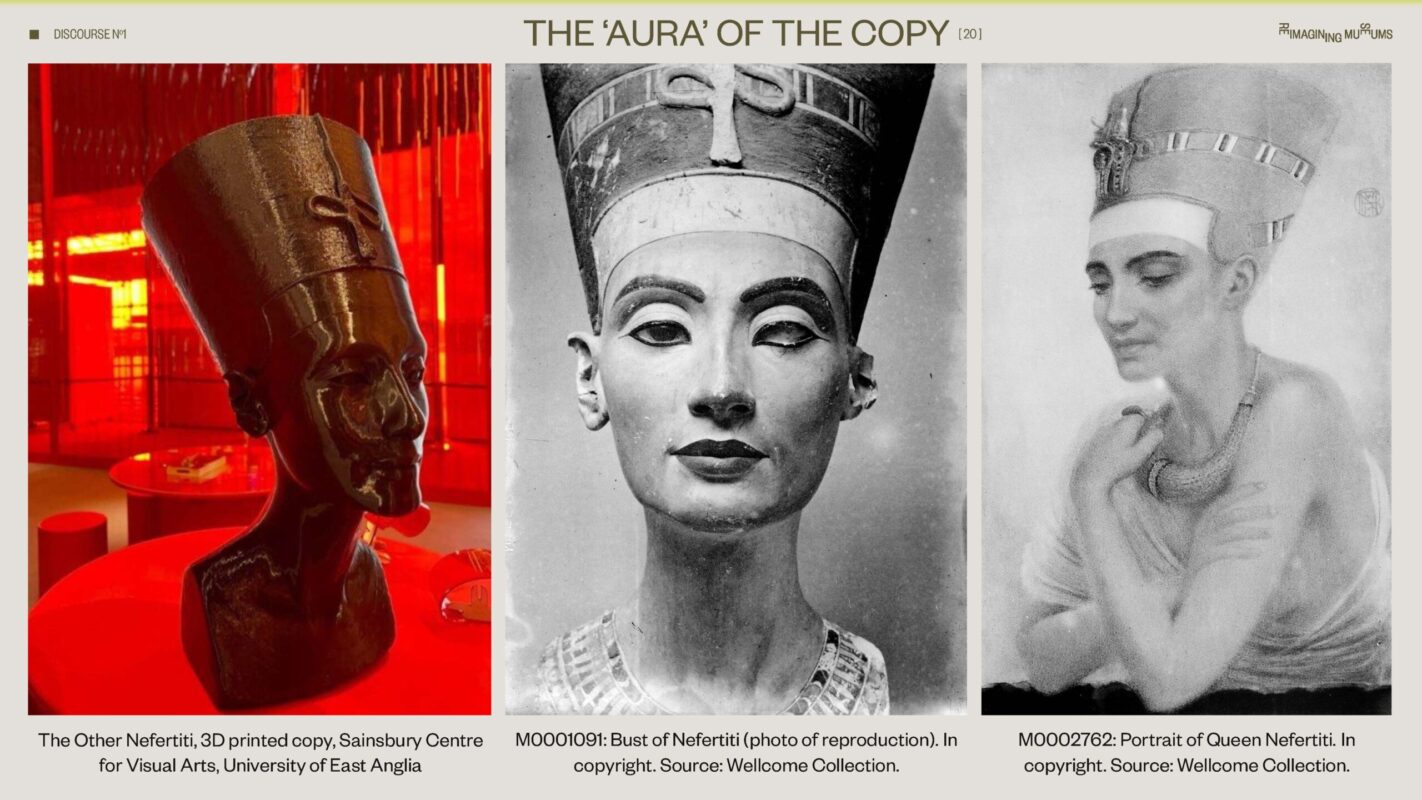
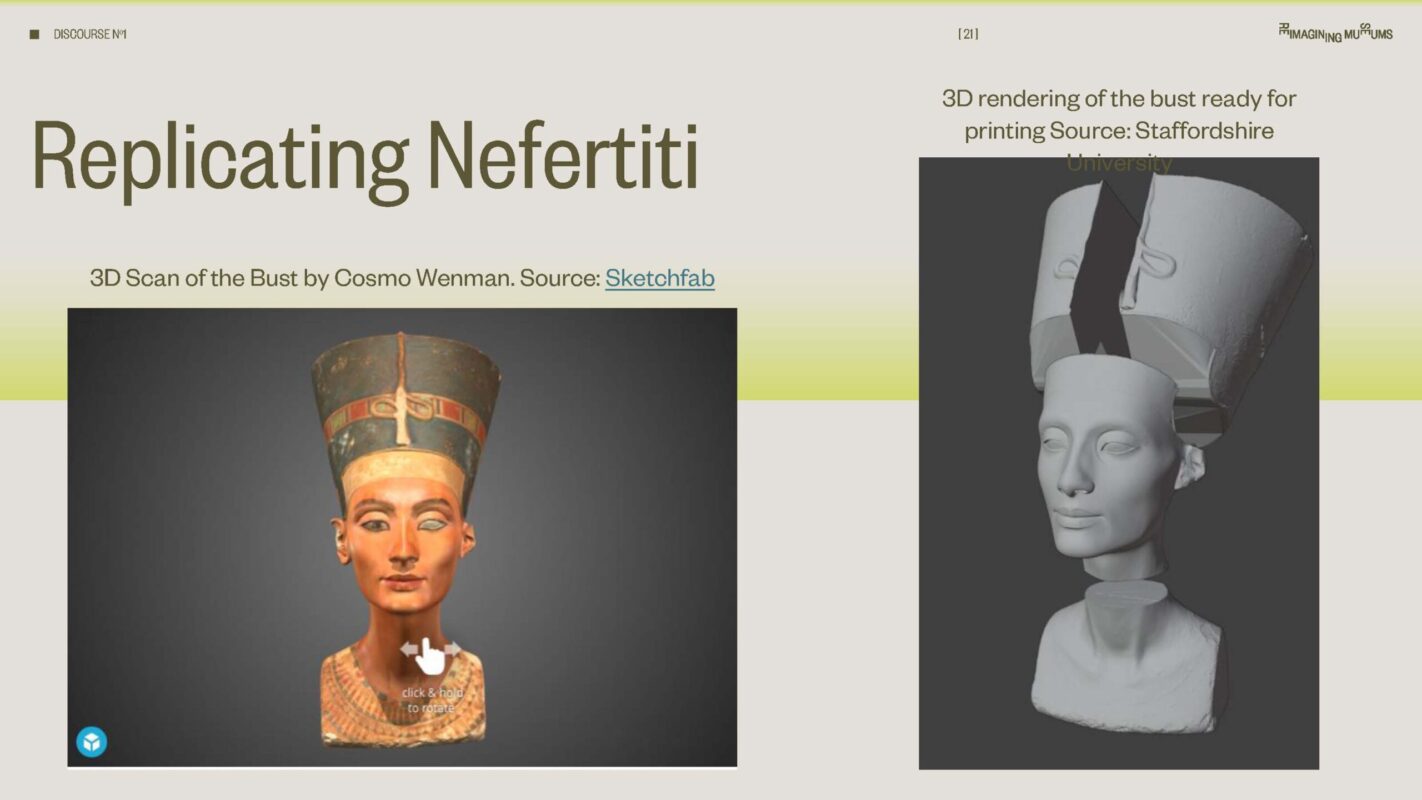
Open access data were used by the RiM team from 3D scans of the Bust of Nefertiti, released by the Neues Museum Berlin and published by artist-activist Cosmo Wenman after his three-year freedom of information effort, and several 3D printed replicas were created at different scales. Alongside this, the team collated other 2D representations and replicas of Nefertiti in the Wellcome Collection’s catalogue (e.g. M0001091: Bust of Nefertiti) and a contemporary work Nefertiti (Black Power) by Awol Erizku in the collection of the Sainsbury Centre at the University of East Anglia.
Three-dimensional (3D) printing is an additive process of making objects from a computer-aided design model. It is an easily customisable and open format that has the ability to create almost any shape or geometric feature and has been used in biomedicine to create tissue scaffolds (Niaounakis 2015). Because of its open format and the possibilities that arise from this, 3D printing has become “a projection screen for longstanding visions of decentralised and democratic production, eco-social participation, and open, shared knowledge”, making these desires tangible, whilst “reducing the complexity of the many possible futures” (Ibach 2023, 326). It is a form of “design activism”, which espouses an influential political imaginary of a “commons-based utopia”. Here, 3D printing is a social tool for shared resources and community control over the means of production (Stein 2017). This decentralised and democratic vision is shared by museum activist Cosmo Wenman, who released the 3D scanning data of the Nefertiti Bust, and argues:
…museums and private collectors should make 3D scans of important public domain works freely available to the public. With 3D scanning and related technologies, private collectors and museums have an unprecedented opportunity to become engines of new cultural creation. They should digitize their three-dimensional collections and project them outward into the public realm to be adapted, multiplied, and remixed in new, unpredictable ways that will shape the arts for millennia. (Wenman, 2015)
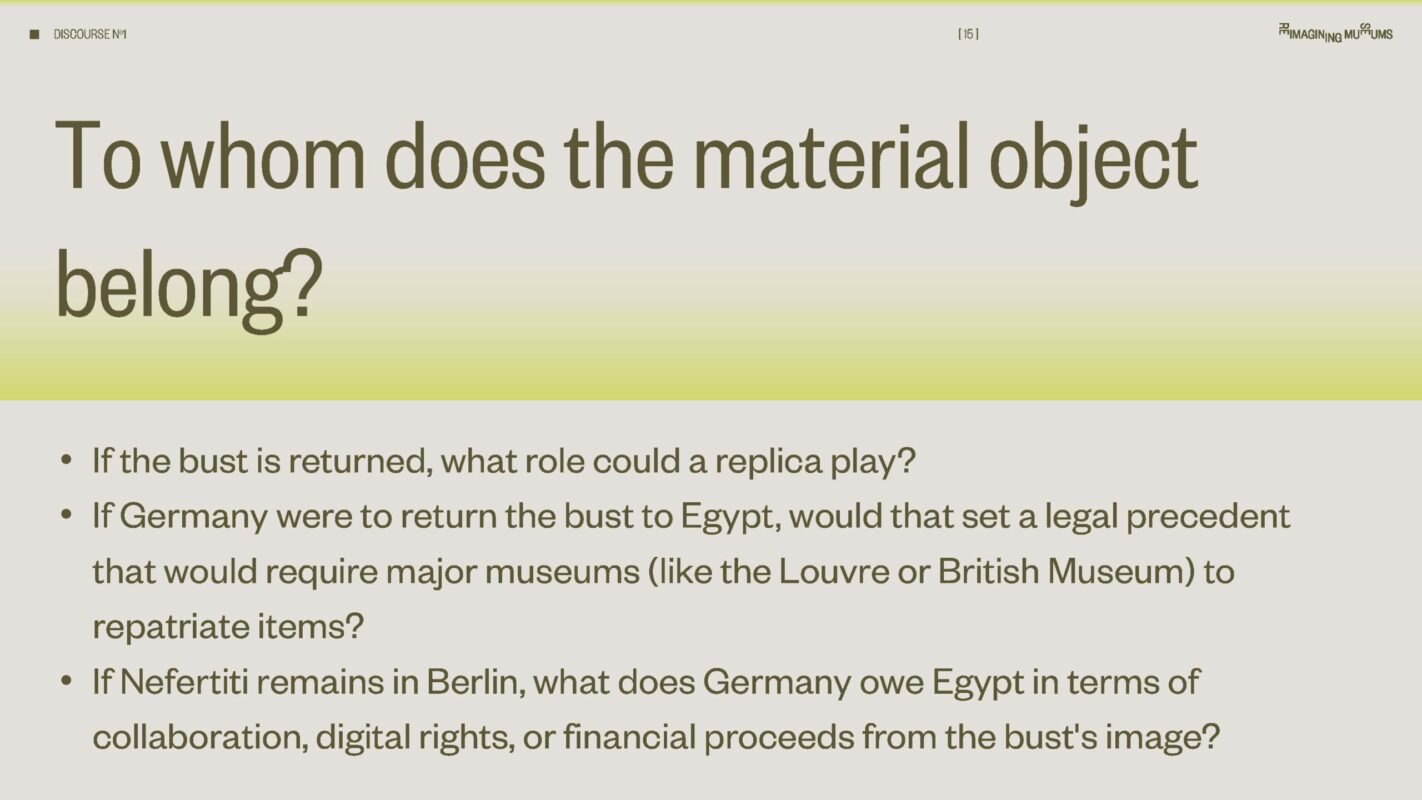
Reimagining Museums is exploring the potential of this medium for the reimagining of contested objects, through offering a way to easily and inexpensively create replicas of cultural property. We are exploring whether such replicas could be retained by Western museums, allowing for original artefacts (with spiritual, cultural, and ancestral significance) to be repatriated to those places of origin that are making claims for repatriation and in some cases sharing the digital 3D data as well.
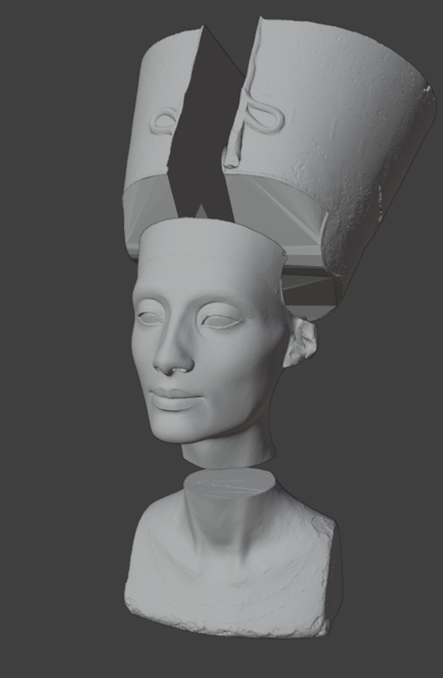
Image source: 3D rendering of the bust ready for printing. Image by Staffordshire University
Our session at the conference, To whom does Nefertiti belong?, offered an opportunity to discuss and reflect on the three ‘wicked problems’ (provenance and repatriation, cultural iconography, and authenticity) through delegate engagement through object handling with a selection of 3D printed replicas, reflective questions, as well as creative materials in small groups. Participants were asks to consider questions related to Nefertiti as material and intangible cultural property:
- Should the bust be returned to Egypt?
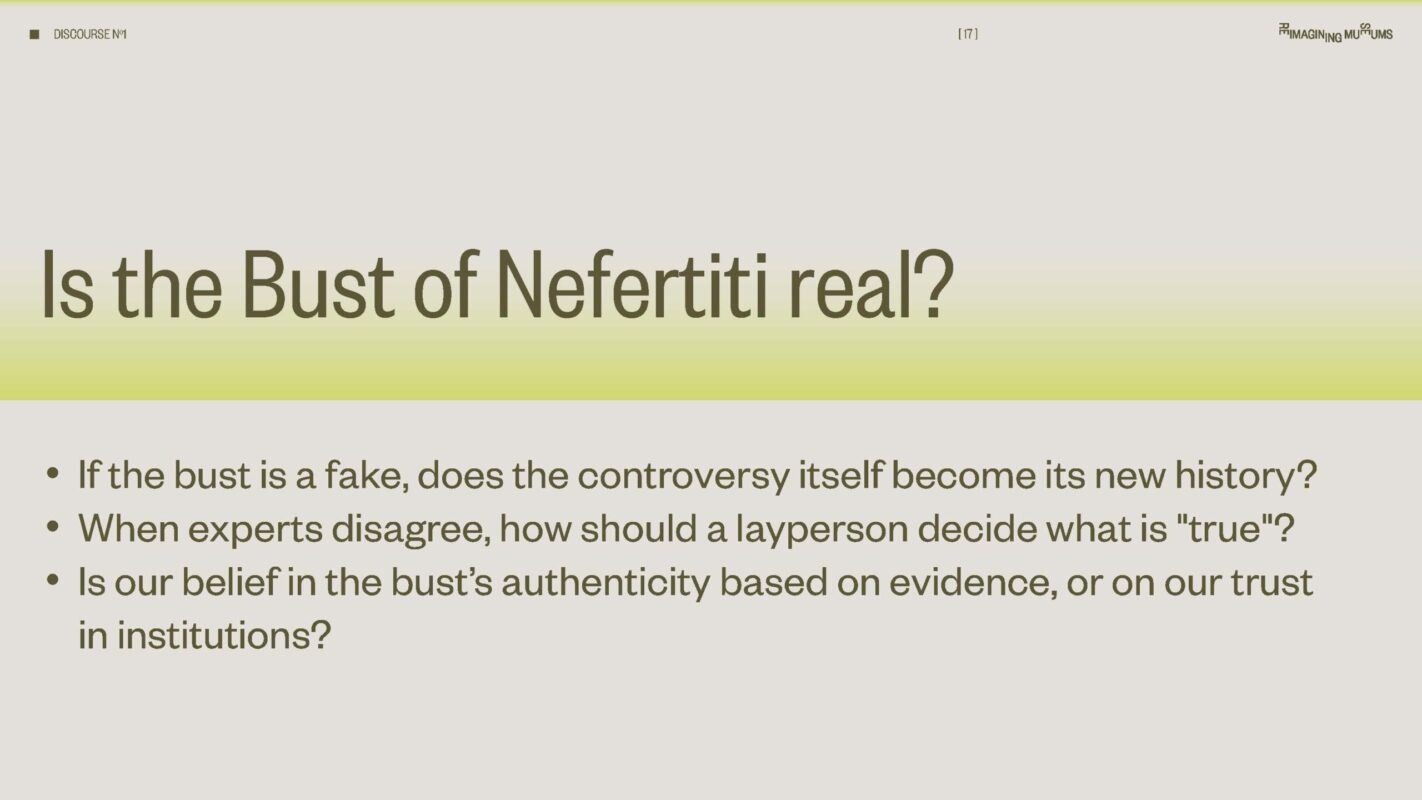
- Could the bust be a fake?
- Does Egyptian culture belong to Africa?

Participants responded to the questions posed through discussion and experimentation with the materials – mainly a form of air-dry clay. Tactile engagement alongside discussion allowed for non-confrontational conversation, with different, sometimes possibly polarised, views coming to the fore. The workshop concluded with sharing and reflection amongst the wider group.
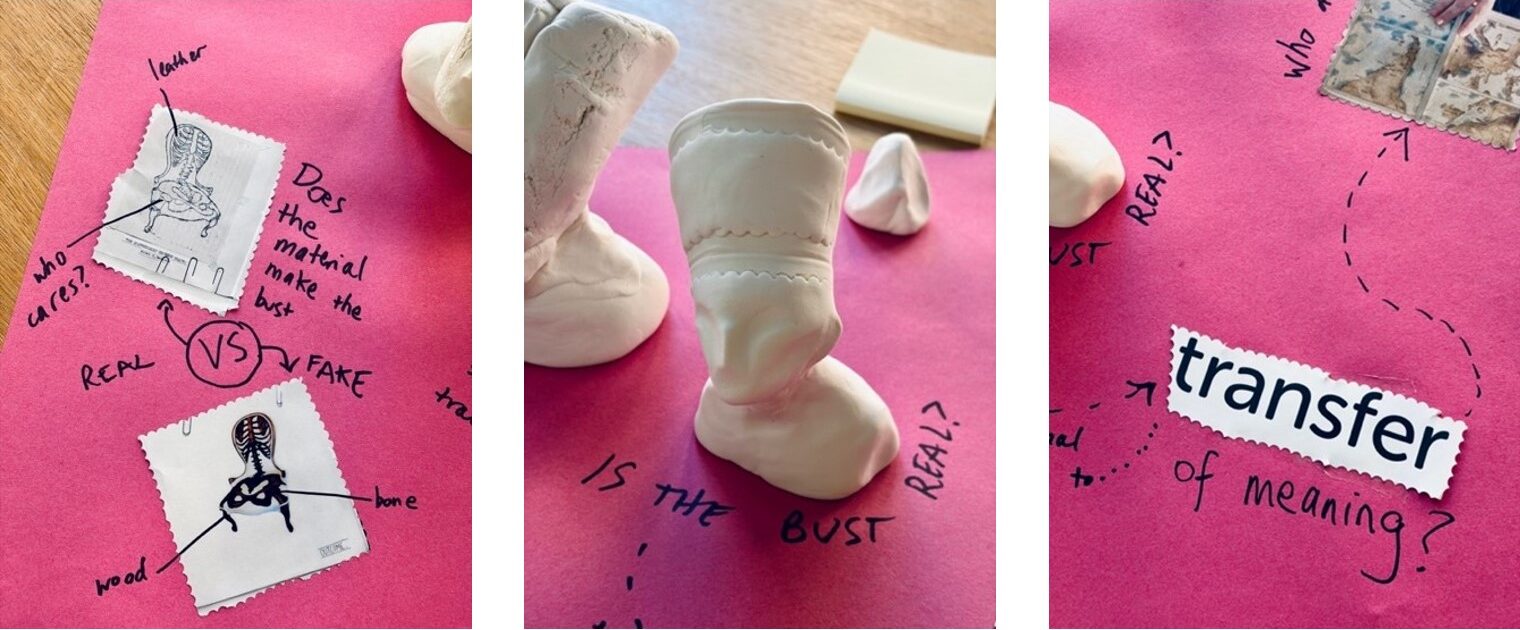
Images source: participant work from workshop at the University of Oxford, March 2026. Photos by Chloe Asker.
Sharon Heal, Director of the Museums Association, who was in attendance, commented that:
“It was extremely interesting to engage in this interactive workshop, especially for the chance to handle a 3D-printed replica of the Bust of Nefertiti. The opportunity to handle the object and discuss and reflect on questions of ownership, identity, fakes and restitution led to reflective conversations and made me think again about these issues and how they play out in the wider museum sector.”
Culture& intends to develop this workshop, along with other programming, at the Museums Association Annual Conference, ‘Museums Connecting Communities’, in Birmingham in November 2026.
References
Davis, Joy. 2022. ‘Confronting Wicked Problems: Perspectives in Museum Publications’. Museum Management and Curatorship 37 (1). Routledge: 110–13. doi:10.1080/09647775.2021.2024680.
Diop, Cheikh Anta. 1989. The African Origin of Civilization. Edited by Mercer Cook. Chicago Review Press.
Hanna, Monica. 2023. ‘Contesting the Lonely Queen’. International Journal of Cultural Property 30 (3): 245–63. doi:https://doi.org/10.1017/S0940739123000115.
Ibach, Merle Kathleen. 2023. ‘Printing Utopia: The Domain of the 3D Printer in the Making of Commons-Based Futures’. Design and Culture 15 (3). Routledge: 323–44. doi:10.1080/17547075.2022.2136562.
McGuiness, Kevin. 2015. ‘Drag Queen: The Liminal Sex of the Bust of Queen Nefertiti’. Eugesta. Revue Sur Le Genre Dans l’Antiquité – Journal of Gender Studies in Antiquity, no. 5 (January). Université de Lille. doi:10.54563/eugesta.708.
Niaounakis, Michael. 2015. ‘Surface Treatment’. In Biopolymers: Processing and Products, 303–26. doi:10.1016/B978-0-323-26698-7.00008-8.
Stein, Jesse Adams. 2017. ‘The Political Imaginaries of 3D Printing: Prompting Mainstream Awareness of Design and Making’. Design and Culture 9 (1). Routledge: 3–27. doi:10.1080/17547075.2017.1279941.
Whiddington, Richard. 2023. ‘Egypt Has Expelled a Dutch Museum’s Team of Archaeolgists From Saqqara in Revenge Over a Controversial “Afrocentric” Exhibition’. ArtNet, June 8. https://news.artnet.com/art-world/egypt-bans-archaeologists-kemet-exhibition-2317450.