Reimagining Museums Webinars
Museums have become significant flashpoints within the so-called “culture wars” in the United Kingdom, from debates regarding the repatriation of looted objects in national museums, to the retention of ancestral human remains, and to the outcry around the removal of statues of slave traders. Museums are a site of cultural heritage, which is a political tool and mechanism for authenticating national values and consecrating cultural power and influence. Here, cultural memory is not innately given, rather it is a process of formulation with selective active or passive acts of remembering and forgetting (Munawar and Symonds 2023). Museums are thus inherently political spaces.
The museums sector, guided by the Museums Association’s (2025) code of ethics, has developed strong principles of equity, inclusion, responsibility, accountability, and transparency – all upheld through the MA’s campaigns of anti-racism, decolonisation, and climate justice. These values, principles, and campaigns are deeply political as they aid professionals with decision-making regarding what museums are for, who they are accountable to, whose histories need recognition, and how authority should be shared.
With the rise of the populist far-right across the globe, these values have become a target of partisan politics, with political disagreement on these topics igniting a “war on woke” institutions and professionals. Museums have thus become sites of contestation within the “culture wars”, as attempts to uncover and critically examine hidden histories, contemporary working practices, and institutional legacies by museums, has received backlash through accusations of defacing national identity and pride.
Reimagining Museums, a Wellcome-funded research project based at Culture& and supported by the ANTITHESES platform at the University of Oxford, is excited to announce a series of webinars on the topics central to Reimagining Museums. Throughout the series, we will provide spaces for thoughtful debate and deliberation on some of the issues facing museums today. We will discuss the contemporary purpose of museums, as well as tools and methods for tackling disagreement. The series will also ask questions regarding the status of human remains in museums, as well as the role of corporate sponsorship in institutional financial sustainability and accountability.
Each Webinar will be 90 minutes and will be hosted online via Zoom. Webinars will be recorded and will involve three or 4 speakers each speaking for 10-15 minutes. There will be time for a panel discussion and questions from the audience.
Questions can be directed to the series organiser, Dr Chloe Asker, on chloe.asker@cultureand.org.
Webinar 1: What is the purpose of the contemporary museum?
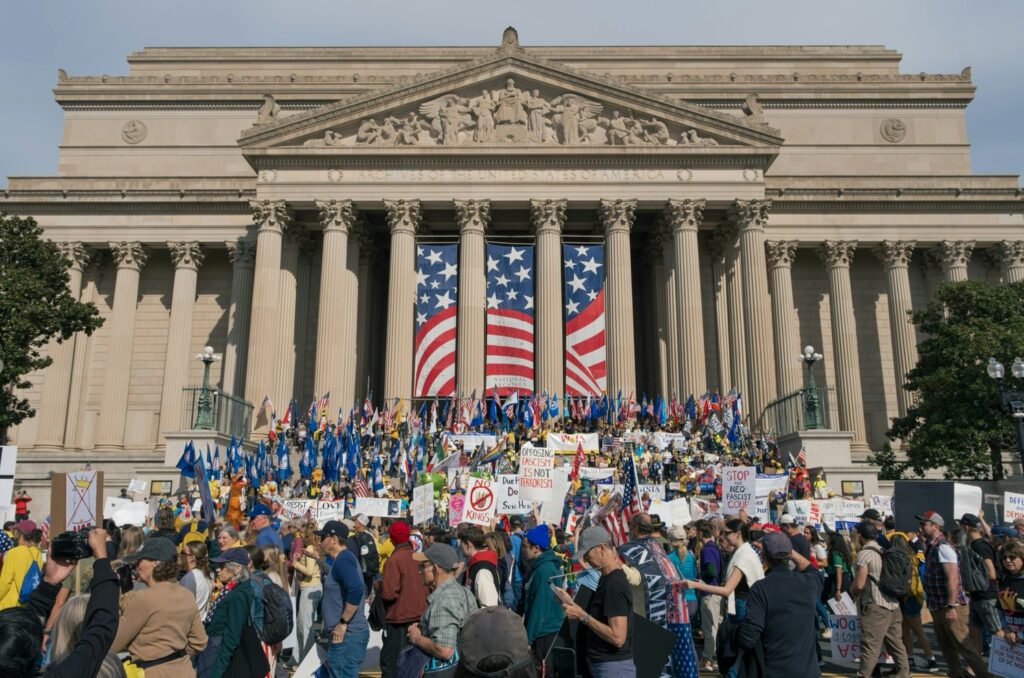
“No Kings” Protest outside of the National Archives Museum, Constitution Avenue Northwest, Washington, DC, USA (October 2025), source: Unsplash
| Date | Thursday 17th September 2026 |
| Time | 12:00 – 13:30 (BST) |
| Session chair | Errol Francis |
Webinar 1: Speakers
Sandra Shakespeare
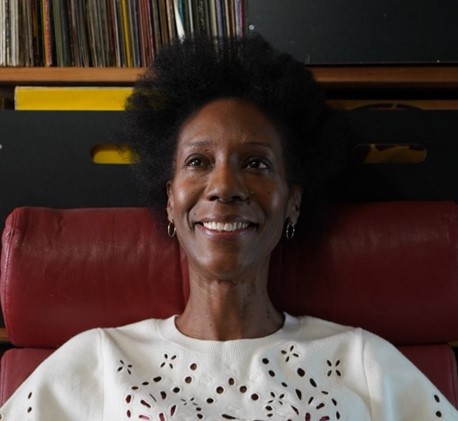
Sandra Shakespeare is a founding director of Museum X CIC and the Black British Museum Project. Museum X works in creative ways with people and museums to explore Black British history. Fundamental to her practice is the creation of work which explores Black British intangible heritage to reshape and expand a national cultural narrative. Sandra also works as a Life Coach and enjoys working with arts, heritage and museum sectors. Her career includes roles at The National Archives developing access to African Caribbean archival collections. A Clore Leadership Fellow, Sandra is a co-founder member of the heritage network Museum Detox – a network for people of colour who work in museums, libraries, galleries, archives, and the heritage sector.
Richard Sandell
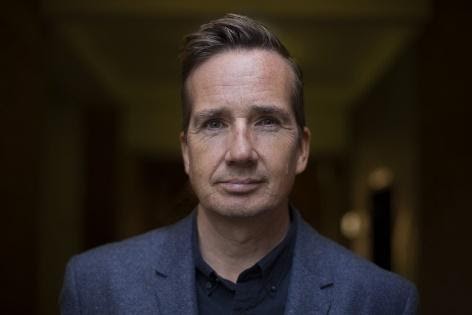
Richard Sandell is Professor in the School of Museum Studies at the University of Leicester and co-director of the Research Centre for Museums and Galleries. His research and practice, carried out in collaboration with museums, galleries and heritage organisations, explores the potential that museums might play in supporting human rights, social justice and equality. His most recent books include – Museums, Moralities and Human Rights (2017) and Museum Activism (with Robert R. Janes) (2019), winner of the Canadian Museums Association’s award for Outstanding Achievement for Research in the Cultural Heritage Sector.
Webinar 2: What tools or methods can we use to approach ethical disagreement in museums?
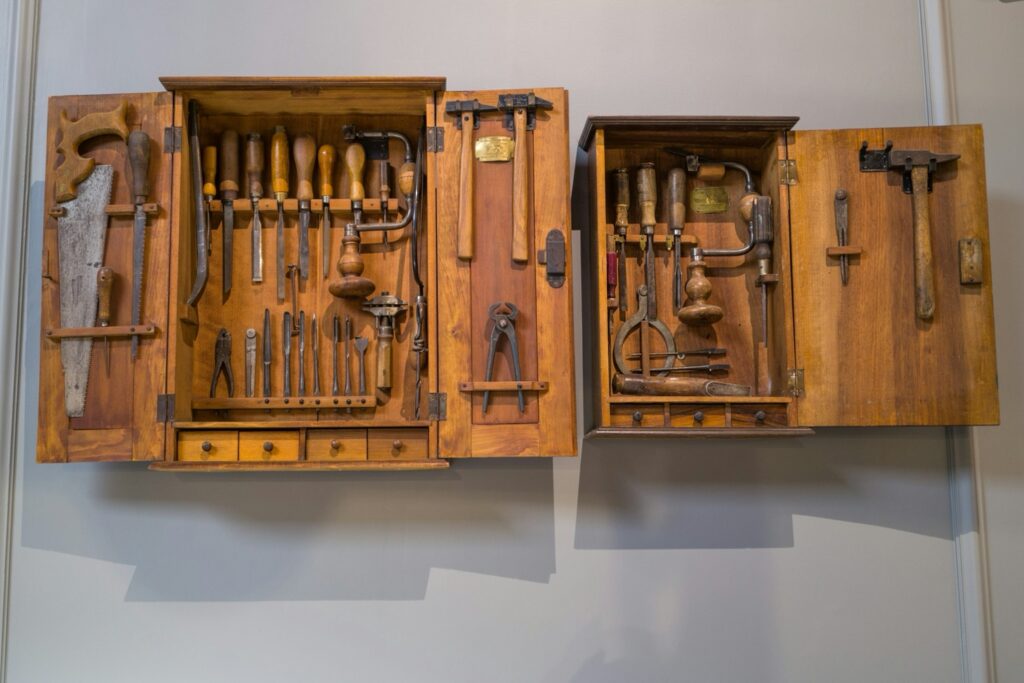
Tool cabinet with old tools in the Peugeot Museum (June 2022). Source: Unsplash
| Date | Thursday 1st October 2026 |
| Time | 14:00 – 15:30 |
| Session chair | Victoria Tischler |
Webinar 2: Speakers
Zandra Yeaman
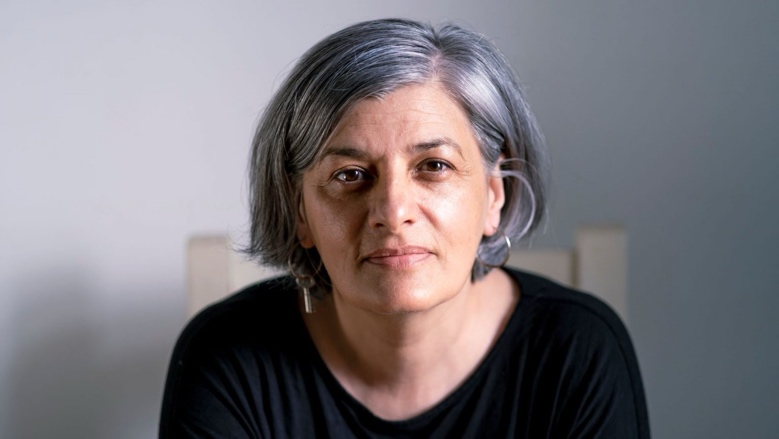
Zandra is the Curator of Discomfort based at the Hunterian Museum. Curating Discomfort is looking at ways outside of traditional museum authority to explore the interpretation of contested collections and to design and deliver a series of museum interventions that takes the museum out of the institutional comfort zone. As an anti-racist activist, Zandra works with museums to gain an understanding of current social systems and how they are influenced by the legacy of empire, slavery and colonialism.
Dr Julia Leser
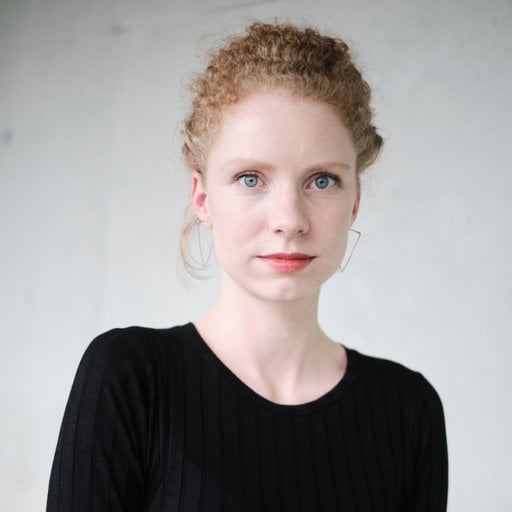
Julia Leser is a Senior Researcher at the Institute for Peace Research and Security Policy at the University of Hamburg. Previously, she was a Research Fellow at the Collaborative Research Centre “Dynamics of Security” at Marburg University and a Postdoctoral Researcher at Humboldt University Berlin, where she coordinated the transnational research project “Challenging Populist Truth-Making in Europe”. Dr Leser researches far-right politics, internal security, and democratic transformation processes in Germany and Europe.
Webinar 3: Should human remains be held in museums?
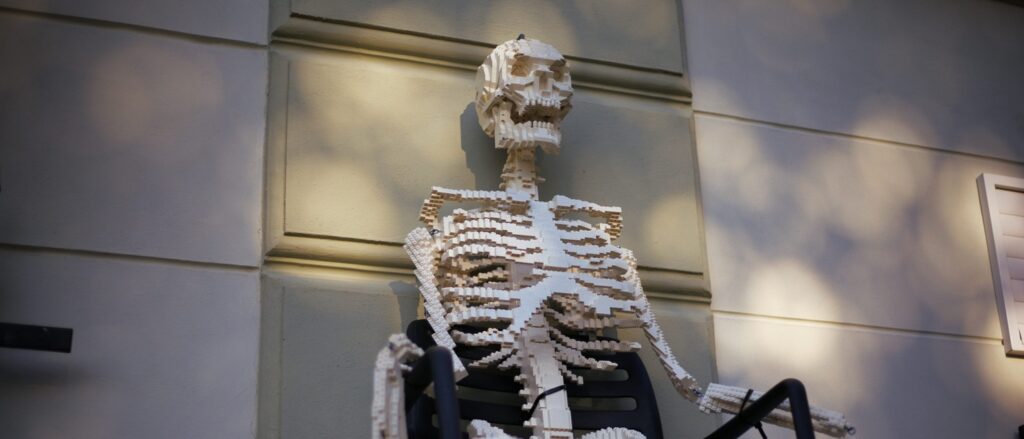
Skeleton made from Lego (October, 2025). Source: Unsplash
| Date | Thursday 8th or 15th October 2026 |
| Time | 12:00 – 13:30 |
| Chair | Errol Francis |
Webinar 3: Speakers
Professor Liv Nilsson Stutz
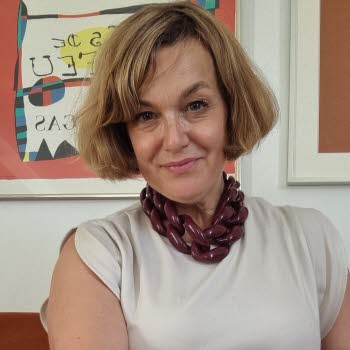
Liv is a bioarchaeologist and archaeologist, currently working as a professor in Archaeology at Linnaeus University. Her research interests are broad and interdisciplinary, including research ethics with regards to human remains, death and rituals of handling the body, repatriation, and material cultures.
Professor Kirsty Squires
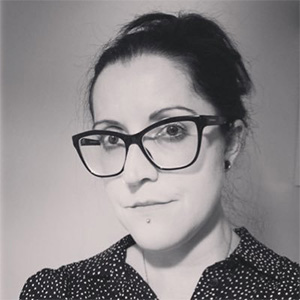
Kirsty is a Professor of Human Bioarchaeology and MSc Forensic Science course leader, teaching primarily in the areas of biological anthropology, taphonomy, archaeology, DVI, and forensic humanitarianism. Her recent publications include: “To sell or not to sell: the British Association for Biological Anthropology and Osteoarchaeology’s position on the trade and sale of human remains in the UK”.
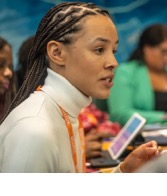
Iben is an independent researcher returning to SOAS University of London to undertake a PhD on restitution. As a policy consultant at AFFORD, she worked on the organisation’s African Ancestral Remains Project, which produced research on behalf of the UK All-Party Parliamentary Group for Afrikan Reparations.
Webinar 4: Should museums accept corporate sponsorship?
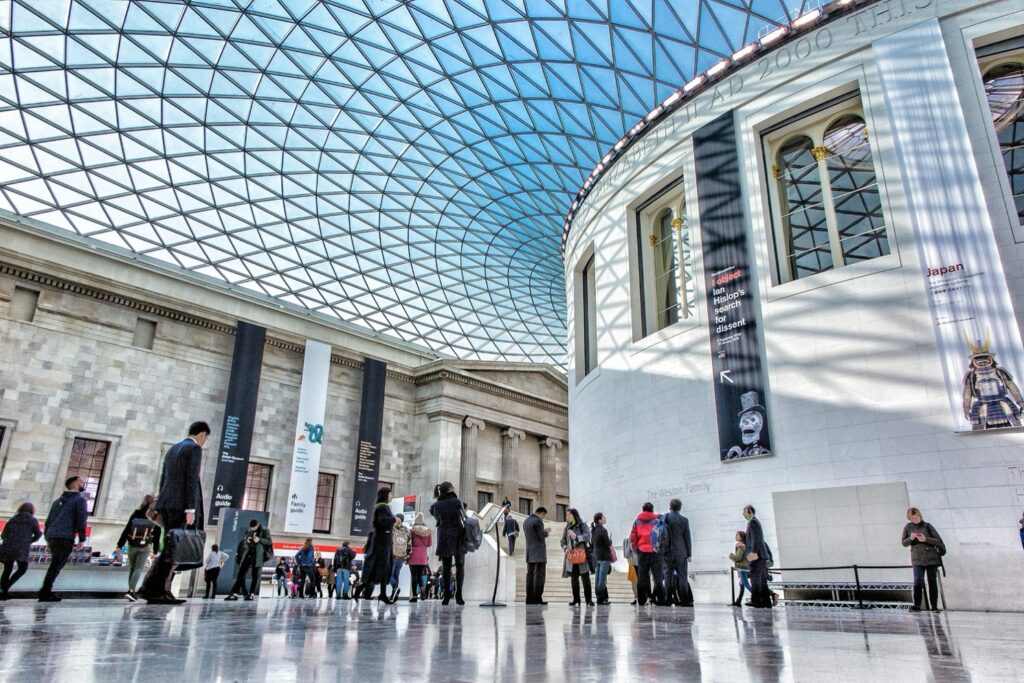
The British Museum (December 2019). Source: Unsplash
| Date | Thursday 22nd October 2026 |
| Time | 15:30 – 17:00 |
| Chair | Chloe Asker |
Webinar 4: Speakers
Dr Camille-Mary Sharp
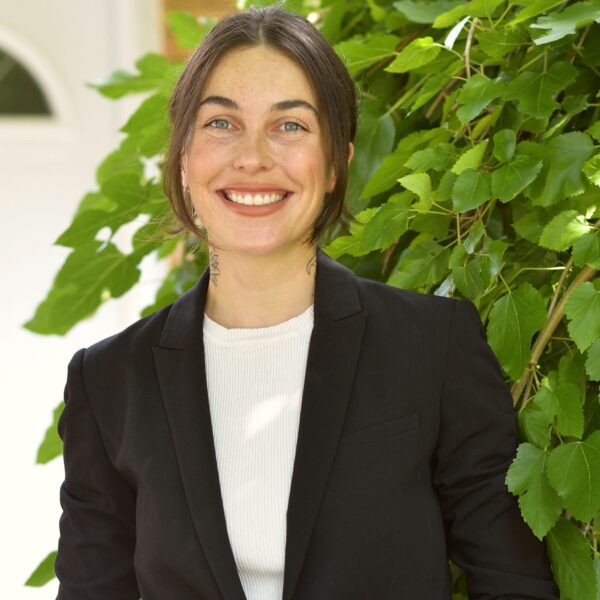
Camille-Mary Sharp researches the relationship between museums and resource extraction, including sponsorship by oil and mining industries and growing protests around these partnerships. She holds a Ph.D. in Information Studies and a Master of Museum Studies from the University of Toronto. She is currently working as a Postdoctoral Associate with the Centre for Sustainable Curating at Western University, documenting the practices of oil museums to understand how the contemporary preservation of petroleum heritage can enrich discussions of sustainable museology.
Dr Bethany Rex
Bethany is a Leverhulme Early Career Research Fellow at the Centre for Cultural & Media Policy Studies at the University of Warwick. Her research is interested in how the austerity policies of central government have affected local governments across England, and the (uneven) impact this has had on the provision of cultural services. This research links to ongoing work in CCMPS on questions of museums and public heritage
Dr Paula Serafini
Paula is a Senior Lecturer in Creative and Cultural Industries in the School of Business and Management at Queen Mary, University of London. Dr Serafini’s work is in the field of cultural politics, and her research interests include extractivism, social movements and art activism, cultural labour, and socioecological transitions. Her research has been funded, among others, by the British Academy, and in 2023 her latest book Creating Worlds Otherwise received an honourable mention from the Visual Cultures Studies section of the Latin American Studies Association.
Webinar 5: To whom does Nefertiti belong?
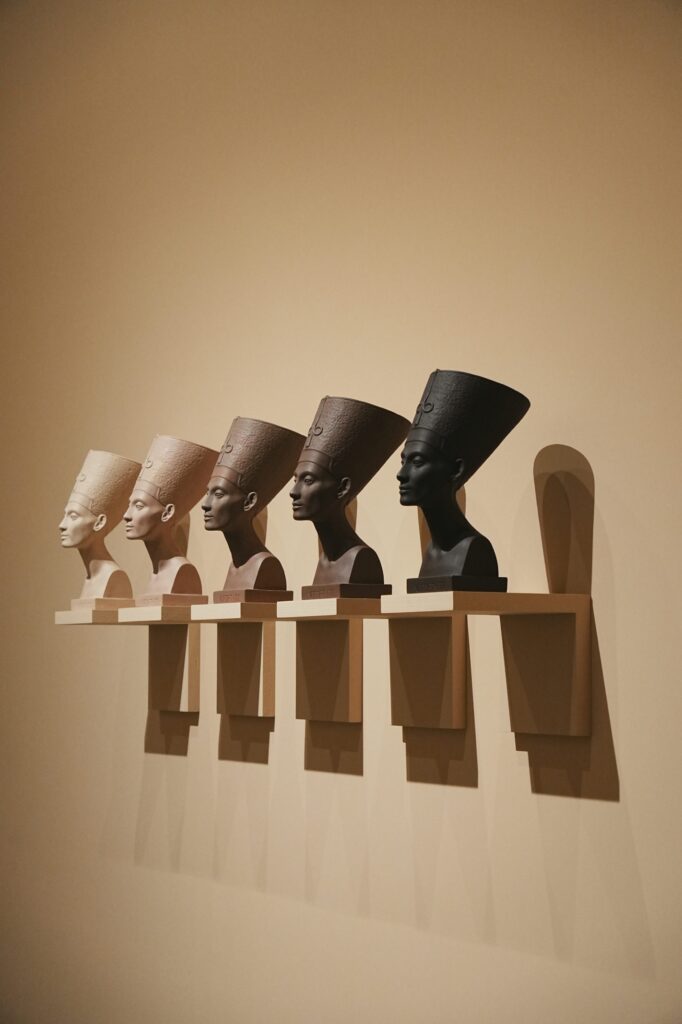
Fred Wilson (American, born 1954). Grey Area (Brown version), 1993. Pigment, plaster, and wood, Overall: 20 x 84 in. (50.8 x 213.4 cm) Each bust: 18 3/4 x 9 x 13 in. (47.6 x 22.9 x 33 cm). Photo sourced on Unsplash.
| Date | Thursday 5th November 2026 |
| Time | 12:00 – 13:30 |
| Chair | Errol Francis |
Webinar 5: Speakers
Dr Monica Hanna
Monica Hanna is an Egyptian Egyptologist and campaigner. She is Dean of College of Arts and Sciences at AUIB University. She campaigns against looting and theft of historical Egyptian artefacts, and has called for the return of Egyptian objects held in museums abroad. Her 2023 paper, “Contesting the Lonely Queen” sets the agenda for the decolonisation and restitution of the Bust of Queen Nefertiti.
Professor Sebastian Conrad
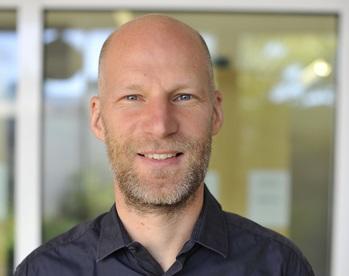
Sebastian Conrad holds the Chair of Modern History at Freie Universität Berlin. His recent book is Die Königin: Nofretetes globale Karriere (The Queen: Nefertiti’s global career). The book uses the famous bust of Nefertiti to understand the making of a global icon. The characteristic image of Nefertiti is known all over the world. Discovered in 1912 and first exhibited in 1924, her bust has turned into an icon of universal beauty that is globally recognized. How did this transformation happen, from ancient queen to modern icon?